
Places with a story
Mo kirke
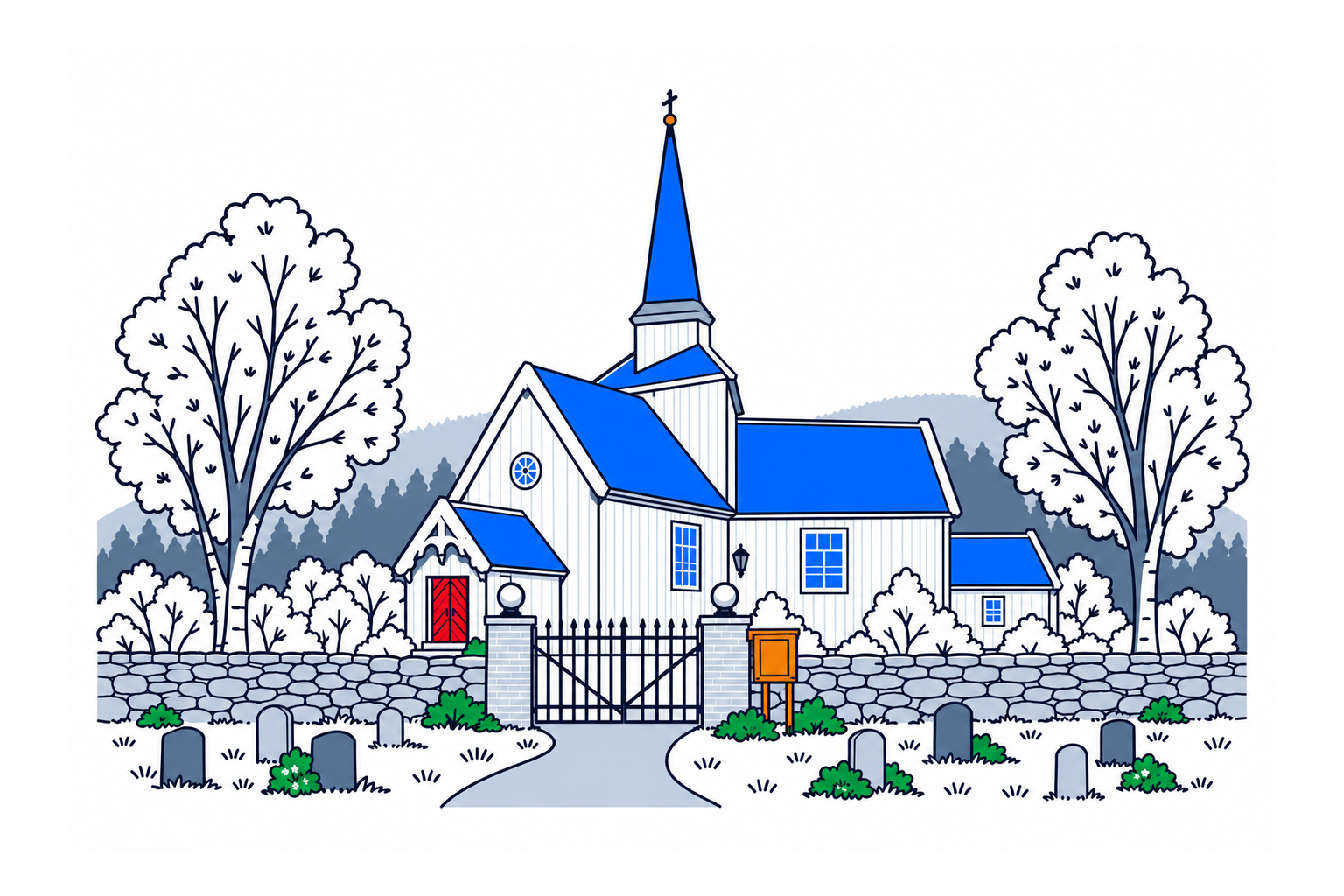
Mo kirke in Surnadal is a timber church whose ground plan forms a Y. That unusual arrangement makes the building valuable for understanding how Protestant worship influenced church design, while older furnishings and nearby archaeological finds connect it with a longer local history.
The place1
The church was built in 1728 after an earlier church was demolished. The parish explains the Y-plan as a variant of the cruciform church tradition. Interpretations differ: it has been associated with the Trinity and with allowing the congregation to see and hear the preacher clearly. Neither explanation needs to exclude the building's practical use.
History and local connections1
An earlier stave church is documented in 1589 and received a timber cross-arm in 1646. Some furnishings passed into the new church, including a memorial panel associated with King Christian V's 1685 visit and a bell bearing the date 1650. These survivals link the present structure with the parish's earlier buildings and gatherings.
What to look for1
Look at the three arms and the way the congregation's space relates to the pulpit. The church's red exterior was restored in 1938 after a period when it was painted white. The parish also describes Viking Age burial discoveries during churchyard work, adding a separate archaeological layer rather than proving that the church was deliberately built around those graves.
Planning a visit1
Consult Surnadal parish for current services and possibilities for seeing the interior. Respect the active churchyard and archaeological heritage around it. The building's form is visible outside, but its furnishings and internal arrangement are best understood during an authorized visit or guided explanation.
Sources
Last checked:
More places in Møre og Romsdal


SamfunnPrep
Discover Norway. Prepare for the test.
Practice questions, clear explanations and mock exams.