
Places with a story
Norsk Klippfiskmuseum
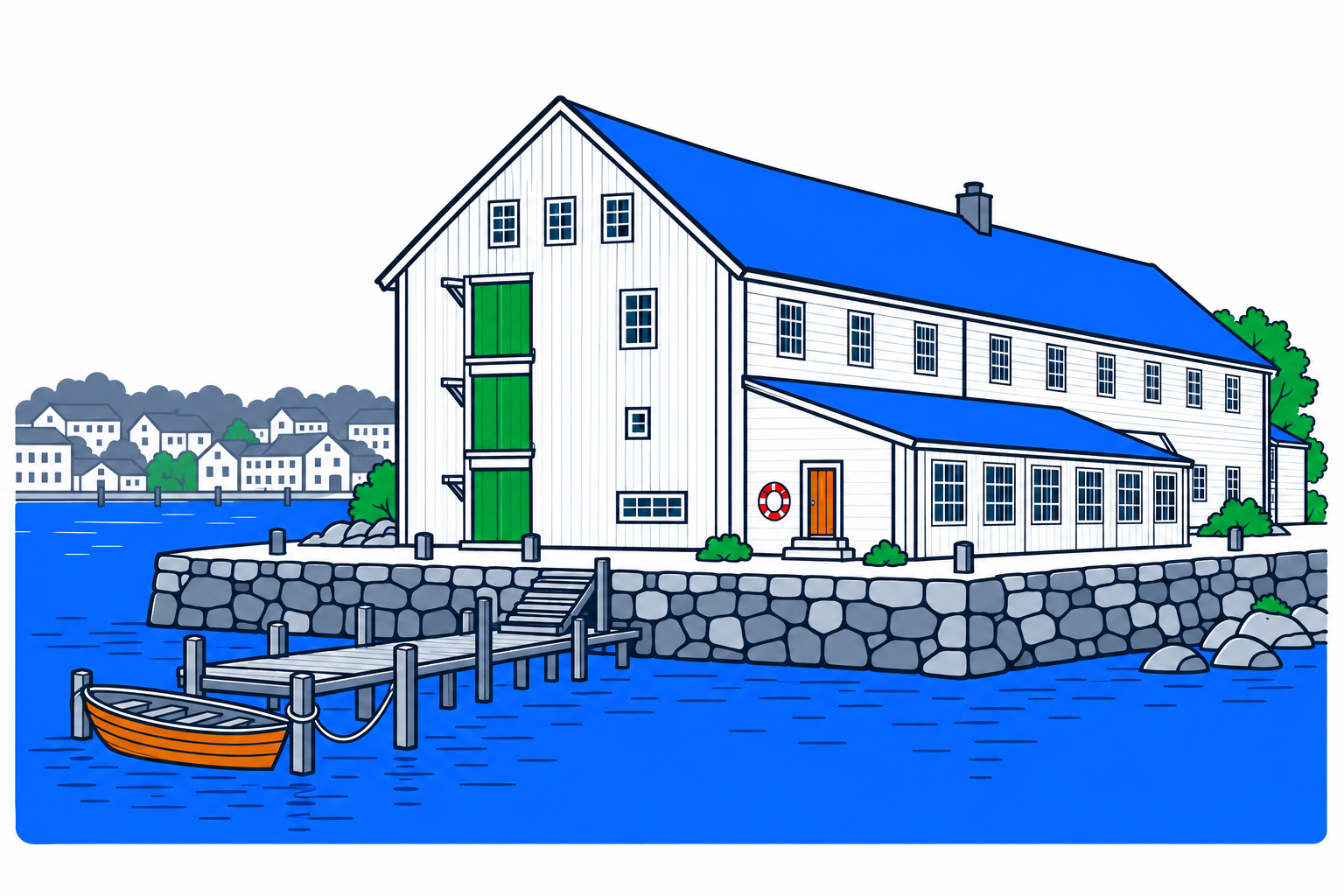
Norsk Klippfiskmuseum explains the industry that helped shape Kristiansund through the building and shore where it happened. At Milnbrygga, an eighteenth-century waterfront warehouse, the production of salted, dried cod becomes a story of trade, weather and demanding manual work.
The place1
The museum is in an authentic warehouse beside Milnbergan, smooth coastal rocks once used to dry the fish. These surroundings connect the exhibits directly with Kristiansund's maritime economy. Klippfisk is cod that is split, salted and dried; its production differs from the unsalted air-dried fish associated with northern Norway.
History and local connections1
William Gordon built the warehouse in 1749. Walter Miln took over in 1772, giving the building its familiar name. Fish arrived by boat, was washed, salted and pressed, and later laid out on the rocks. Workers had to move it repeatedly as the weather changed; the museum describes women and children as an important part of this labour.
What to look for1
Photographs and the warehouse environment help visitors follow the production process and the trade that sent fish abroad. Look at the relationship between the storage building, landing places and drying grounds. A fish product in a shop can seem simple, but this landscape reveals the coordinated work required before modern industrial drying.
Planning a visit1
Use Nordmørsmusea's museum page to check seasonal visiting arrangements and possibilities for a guided visit at other times. The warehouse and neighbouring rocks form one historical environment, although indoor access follows museum arrangements. Conditions beside the sea vary; treat the old working shore as part of the heritage area.
Sources
Last checked:
More places in Møre og Romsdal


SamfunnPrep
Discover Norway. Prepare for the test.
Practice questions, clear explanations and mock exams.