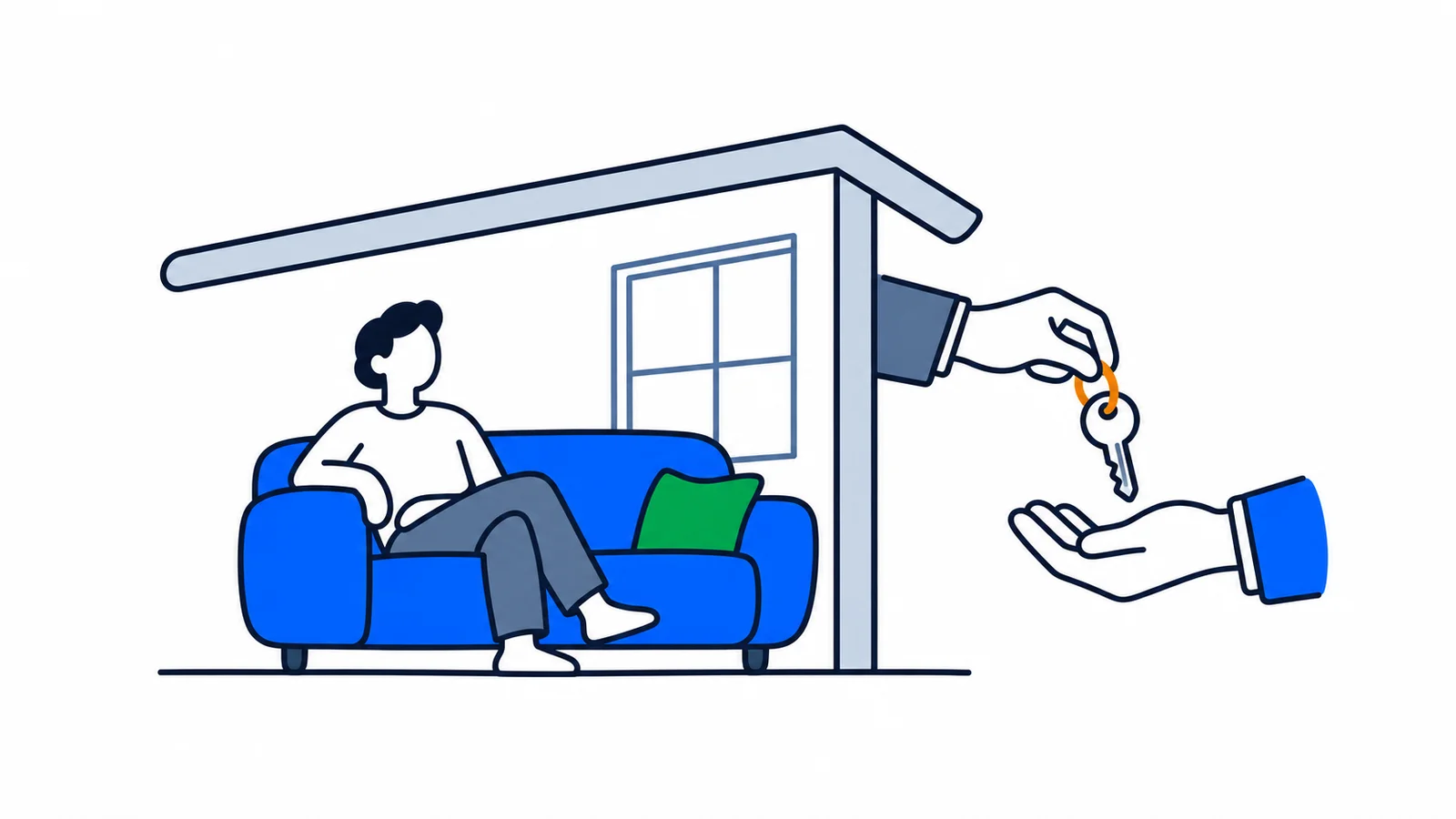

Radon in a rental home is the landlord’s responsibility. You can ask to see the measurement records. Action is required above 100 Bq/m³, and the annual average must be below 200 Bq/m³. Measurements should normally last at least two months during winter.
Who is responsible for radon in a rental home?
The landlord must arrange radon measurements and ensure safe levels in the home. As a tenant, you should be able to see the records.
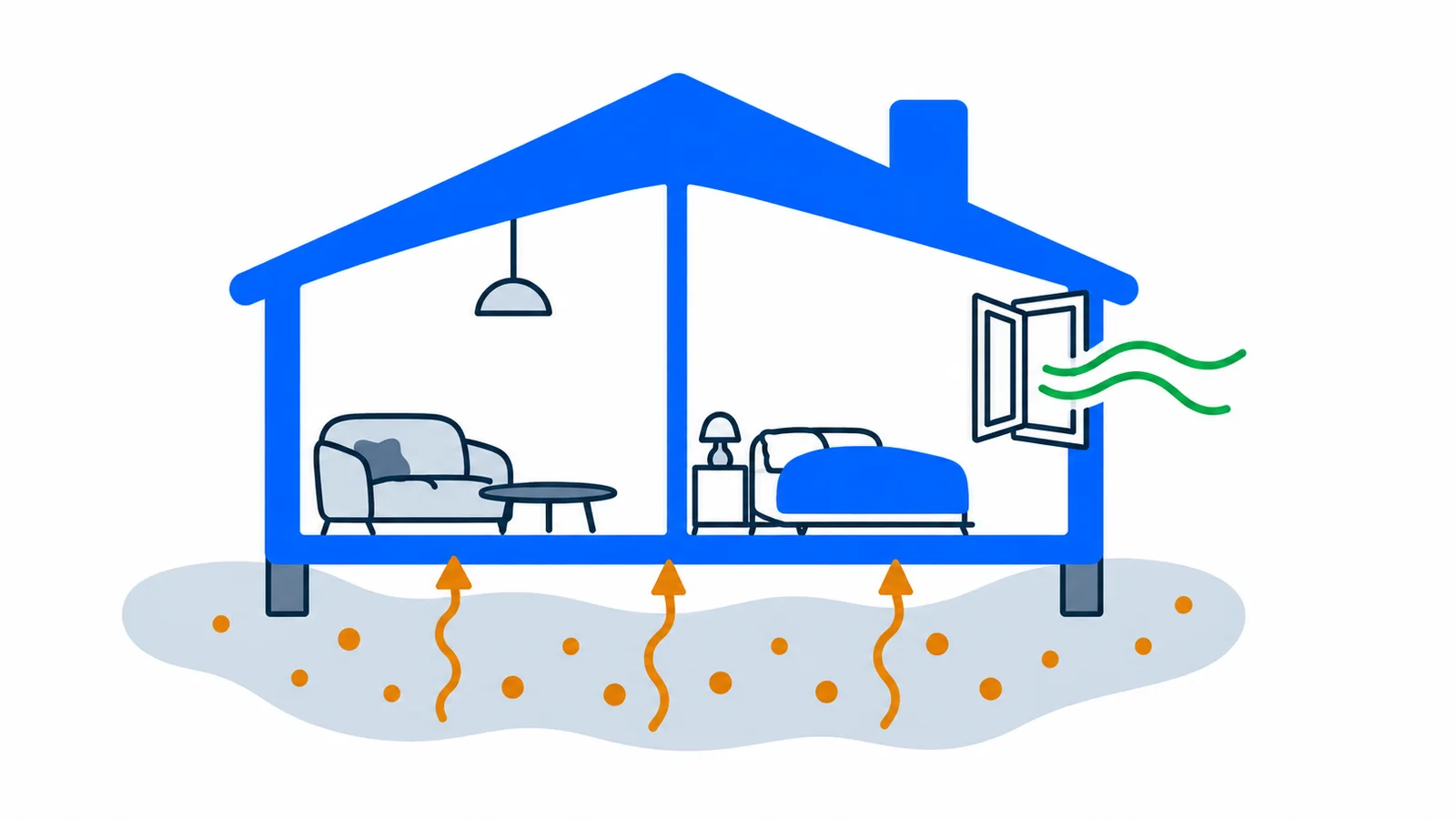
Radon is an invisible, odourless radioactive gas. It can come from the ground and collect indoors. You therefore cannot assess radon by smell, cleaning or the way a home looks. A measurement is needed.
The Norwegian Radiation and Nuclear Safety Authority, DSA, is the expert authority on radon. As of 3 October 2026, DSA explains that the requirements apply to public and private rental homes. A bedsit or apartment in the landlord’s own house is also covered. See DSA’s guidance on radon in rental homes.
Radon is a different problem from damp and mould. A dry home can still have a radon problem. If you also see mould, SamfunnPrep has a separate guide to mould and tenant rights.
What do the limits of 100 and 200 Bq/m³ mean?
100 Bq/m³ is the action threshold, while 200 Bq/m³ is the limit value. So a result below 200 is not automatically acceptable.
Bq/m³ means becquerels per cubic metre. The unit shows the amount of radioactivity in the air. The rental-home requirements use the annual average: a calculated average value for the whole year.
DSA’s rules and guidance as of 3 October 2026 can be read as follows:
| Annual-average measurement | What it means |
|---|---|
| 100 Bq/m³ or lower | The level must still be as low as reasonably achievable. |
| Above 100 but below 200 Bq/m³ | The landlord must take action. This level may be accepted after documented measures if the level is as low as reasonably achievable. |
| 200 Bq/m³ or higher | The requirement for an annual average below the limit is not met. Action and a follow-up measurement are needed. |
For example, the report shows 150 Bq/m³. Ask what measures have been taken and for documentation of the result. You should not receive an answer that only says “it is below 200”. Ask DSA or the municipality to explain the report if it is unclear.
A meter showing a single number right now is not the same as a report of the annual average. Check which value the report gives before comparing it with the limits.
When and how should the home be measured?
Measurements must last at least two months between mid-October and mid-April. A short measurement lasting a few days does not provide the same documentation.
DSA recommends measuring in at least two living areas, such as a living room and bedroom. In a home with several storeys, measure at least one living area on each storey. You can measure with track-etch detectors or an electronic meter used according to the measurement procedure.
The landlord can order detectors from a company. Check that the company follows DSA’s measurement procedure for homes. Follow the placement and measurement-time instructions. Do not move a detector between rooms to get multiple results from one measurement.
As a tenant, you can agree practical details with the landlord:
- Which rooms will be measured?
- When will the measurement start and end?
- Who will follow up with the company and receive the report?
- When will you get a copy of the result?
This is a work plan, not new legal deadlines. Agree it in writing so both of you know who takes the next step.
Do all storeys and all homes need to be measured?
Apartments on the third storey and above (counting the ground-level storey as the first) usually do not need radon measurements. The terrain around the building can still affect the assessment.
DSA considers both the ground under the building and ground contact at the rear. An apartment that looks high up from the street may touch the ground on the other side. Do not use the floor number in an advertisement as the only reason to skip a measurement.
The requirements apply to homes that are rented out. Short-term rental of a holiday cabin is normally exempt. If the cabin is used as a home, the requirements apply. For an owner-occupied home that is not rented out, DSA recommends radon measurement, but this is not the same legal duty as for rental homes.
Rentals in housing cooperatives or condominiums are also covered. A representative measurement of the apartment block may be relevant documentation. Ask for the report showing how your home is included in the assessment.
What can you write to the landlord?
Ask for the measurement report and a concrete plan if testing or action is missing. A short written request creates a clear record.
For example, you can write:
Hello. I would like documentation of the radon level in the home. Could you send the measurement report showing the measurement period, rooms and calculated annual average? If the home has not been measured, please tell me about the planned measurement. If the level is above the action threshold, I would also like information about measures and a follow-up measurement.
Save the reply with the report and the rental agreement. When starting a new tenancy, you can ask for the documentation before signing. A general assurance that “the house is safe” does not say what was actually measured.
What can you do if the landlord does not follow up?
Contact the municipality about radon supervision if you lack records or necessary measures. The municipality is normally the local supervisory authority, and DSA can also carry out inspections.
Give the address, say which home you rent, and explain what you have asked the landlord to do. Attach the measurement report and relevant messages. The municipal service may be called environmental health services or be linked to the municipal chief medical officer.
A radon result alone does not decide a possible tenancy dispute. Get specific guidance before withholding rent or ending the agreement. The first goal is to get a proper measurement, documented measures and a safe home.
SamfunnPrep’s practical tools offer more ways to access public services. Start by gathering the report and agreeing who will follow up the next measurement period.