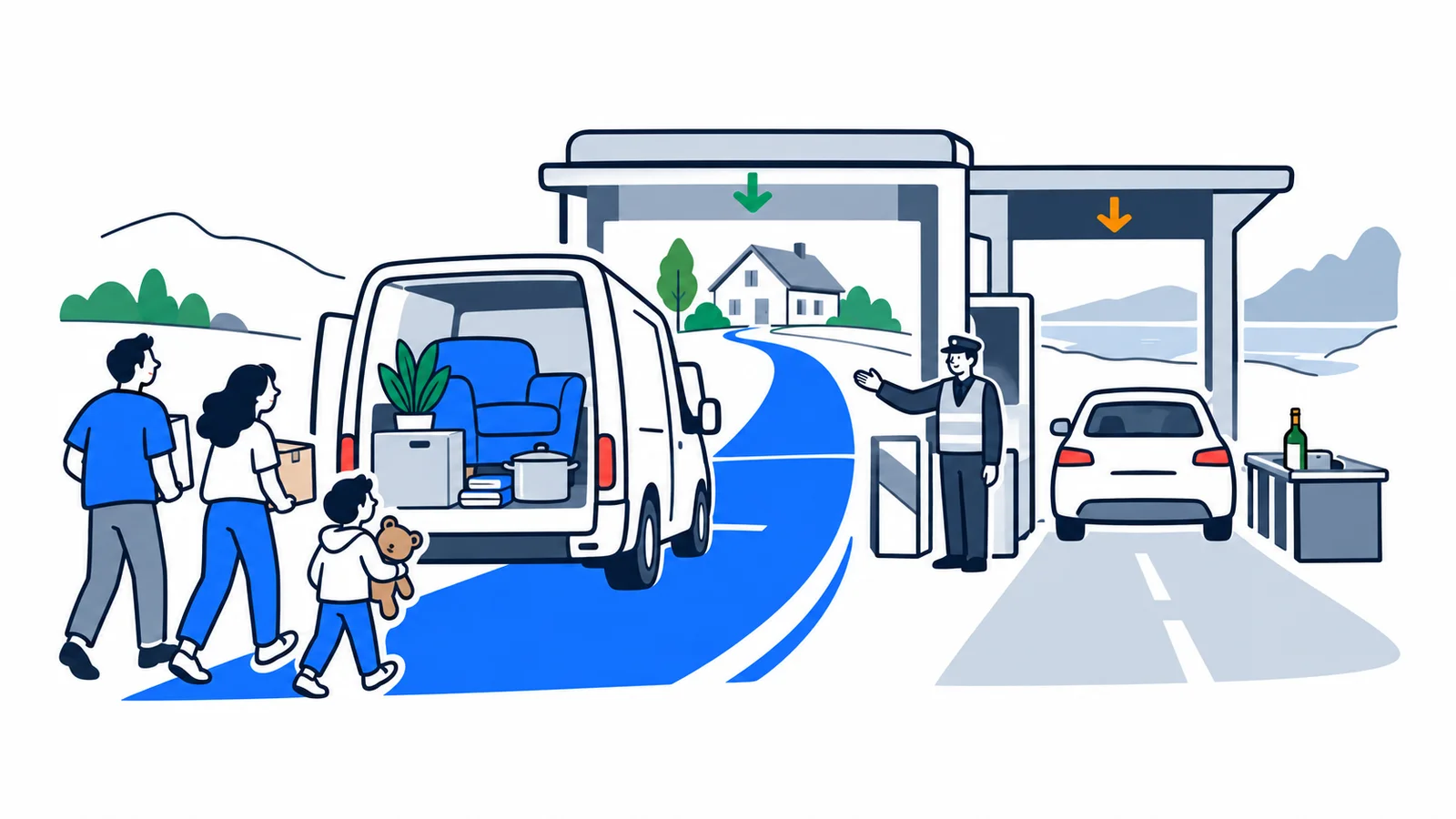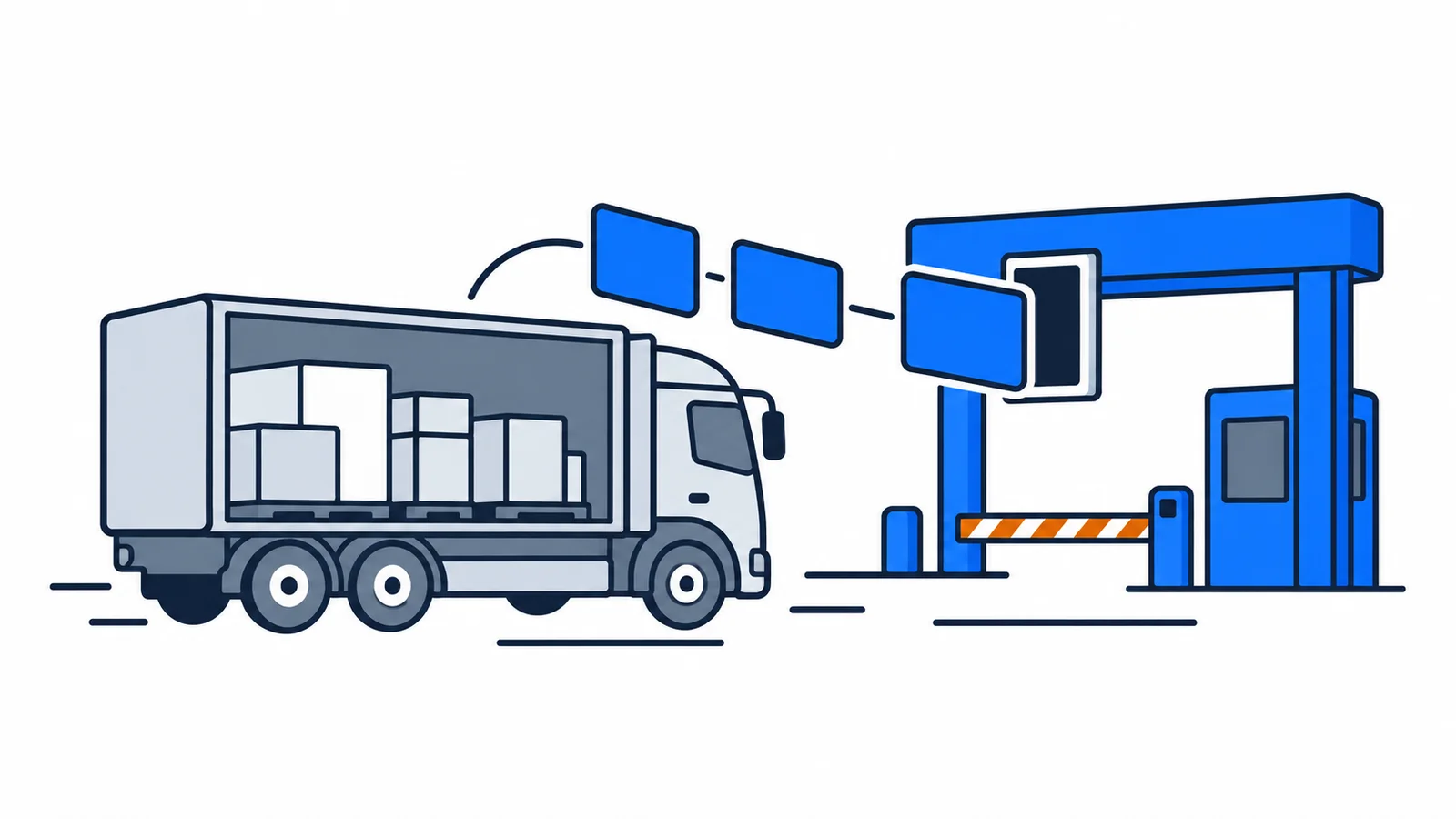

Digitoll became mandatory for import reporting and information requirements on 15 September 2026. Information about goods and transport must now be submitted digitally to the Norwegian Customs Administration (Tolletaten) before or no later than the border crossing.
What became mandatory in Digitoll on 15 September 2026?
From 15 September 2026, businesses must submit reporting and information data digitally before or no later than when the transport crosses the border. Tolletaten calls this the digital reporting and information requirement, abbreviated MO.
The information must identify the goods being brought in, the means of transport carrying them, and when and where the transport will reach the border. Digitoll enables Tolletaten to process the information before the goods arrive.
The requirement applies to commercial movements of goods. If you are simply buying a private parcel from an online shop, the carrier, retailer or another professional party will normally handle the customs process. SamfunnPrep's guide to customs duty and VAT on online purchases explains the rules for private purchases.
A sole proprietorship or limited company importing goods must agree on who is responsible for each task. The tools page contains checklists for practical tasks in Norway.
Who must submit information through Digitoll?
The party responsible for submitting information depends on its role and the transport agreement. The importer does not always need to register or submit every message itself.
Tolletaten distinguishes between several roles:
| Role | Typical responsibility |
|---|---|
| Owner of the goods or importer | Provides accurate and sufficient information about the goods |
| Carrier | Provides transport information and ensures that the goods can be presented for inspection |
| Customs representative or freight forwarder | Submits agreed messages and, where applicable, a declaration on the customer's behalf |
| Self-declarant | Submits information and follows the customs process for its own goods |
| System provider | Provides the technical solution but is normally not responsible for the content |
An owner of goods that uses a freight forwarder will not normally need to register as a Digitoll operator. The owner must nevertheless ensure that the freight forwarder receives accurate information and that the correct party submits it by the deadline.
If the business will submit MO data itself, it must register as a Digitoll operator. It must also have a submission solution, such as a system integration or a service offered by Tolletaten.
What is the difference between MO and a customs declaration?
MO describes the transport and consignments, while the customs declaration places the goods under the correct customs procedure. Both may be required, but they are not the same message.
The Digitoll process may include:
- a message about the means of transport and border crossing
- a master-consignment message when several consignments belong together
- a message about each individual consignment
- a customs declaration in TVINN, Tolletaten's declaration system
- a digital link between the transport, consignments and declaration
Different businesses may submit different parts. Their references must match so that Tolletaten can connect the information. A reference number alone is not enough if information is missing or cannot be linked to the correct transport.
The importer should give the freight forwarder the invoice, product description, quantity, value, country of origin and other required documents well in advance. Certain goods require a permit or additional documentation from other authorities.
Direct clearance and the direct transport scheme are different
The direct-clearance arrangement (direktefortolling) ended on 15 September 2026, while the direct transport scheme (direktekjøringsordningen) ends on 1 March 2027. Tolletaten warns businesses not to confuse these dates.
Direktefortolling meant customs clearance at the border after the declaration had been submitted in advance. From 15 September, declarations that were previously sent to dedicated direct-clearance units must generally be sent to Digitoll dispatch unit 441002. Alternatively, a business may use another lawful arrangement, such as registering the goods at a customs warehouse.
Direktekjøring means that, in certain cases, goods may continue to their destination before the declaration has been fully processed. This scheme remains available until 1 March 2027. From that date, the customs declaration must be submitted no later than the border crossing.
There are therefore two timelines:
- 15 September 2026: digital MO became mandatory and direktefortolling ended
- 1 March 2027: the declaration must be submitted no later than the border, and direktekjøring ends
Do not wait until March to introduce digital MO. That requirement already applies.
What should a small importing business do now?
Clarify responsibilities with the carrier or freight forwarder before the next shipment leaves the country of dispatch. A short written agreement can prevent every party from assuming that someone else will submit the message.
Use this checklist:
- Identify the importer and owner of the goods under the agreement.
- Ask who submits the transport, master-consignment and consignment messages.
- Clarify who submits the customs declaration in TVINN.
- Ask when documents must be provided before transport begins.
- Check the product description, value, number of items, weight and country of origin.
- Agree on who will monitor the status and responses from Tolletaten.
- Prepare a plan for errors, delays or system outages.
If you make your own declarations, check your access, system and registration before the shipment arrives. If you use a freight forwarder, request a written description of what the assignment covers. The term “customs clearance” in an agreement does not always identify who will submit every MO message.
New businesses may also need the guide to registering a sole proprietorship.
What errors can stop a shipment?
Missing, late or unlinked information can lead to additional inspections and delays at the border. Early and accurate submission increases the likelihood that Tolletaten can process the transport before it arrives.
Common problems include:
- an incorrect or unclear product description
- different references used by the carrier and freight forwarder
- an incorrect organisation number or role
- a missing invoice, permit or proof-of-origin document
- a declaration sent to the wrong dispatch unit
- nobody monitoring the status before the vehicle reaches the border
On 15 September 2026, Tolletaten said it would initially emphasise guidance when it identified errors or omissions. This does not make the requirement voluntary. Businesses must still submit the information digitally.
What is the importer still responsible for?
The importer remains responsible for accurate information about the goods even when a freight forwarder performs the practical work. You must provide complete information and check that the agreement covers every necessary task.
VAT, customs duty, commodity classification and possible import restrictions do not disappear with Digitoll. Digitoll changes how information is submitted and processed at the border. For taxes and accounting, read the guide to VAT for sole proprietorships.
Keep invoices, transport documents, declarations, receipts and the agreement with the customs representative. These records make it easier to correct errors and explain the case during an inspection.
Digitoll requires cooperation between the importer, carrier and freight forwarder. When the roles are clear before departure, crossing the border becomes easier. SamfunnPrep explains more practical rules for running a business in Norway. Try it free.