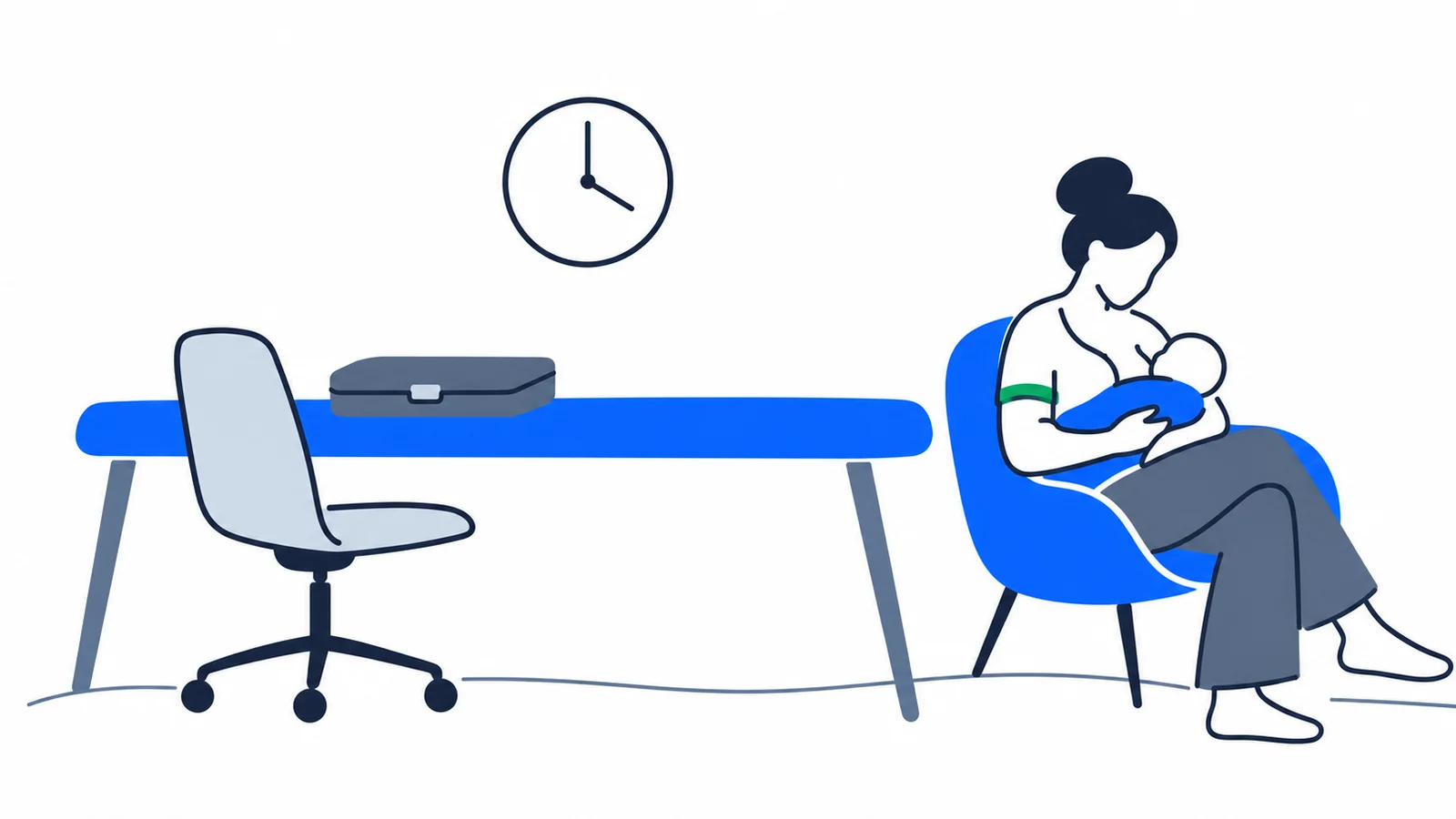

Breastfeeding breaks give you the right to necessary time away from work to breastfeed. During the child’s first year, up to one hour is paid on workdays of at least seven hours. Shorter days or an older child may still give you the right to unpaid time off. A collective agreement may offer better terms.
When are breastfeeding breaks paid?
You are entitled to pay for up to one hour of necessary breastfeeding breaks when your child is under one year old and your workday lasts at least seven hours. Both conditions must be met under the statutory rule, checked on 3 October 2026.
Breastfeeding breaks mean time off you need to breastfeed your child. They are not extra holiday or an automatic hour off for every parent. The right is set out in the Working Environment Act §12-8. Arbeidstilsynet, Norway’s labour inspection authority, explains how the rule is applied.
Ordinary unpaid breaks, such as lunch, count when deciding whether the workday is at least seven hours. Do not look only at your employment percentage. You can work part time and still have some days that meet the requirement.
| Situation | Time off as needed | Pay under the statutory rule |
|---|---|---|
| Child under one, workday at least seven hours | Yes | Up to one hour |
| Child under one, workday under seven hours | Yes | Unpaid |
| Child one year or older | Yes, if you still breastfeed | Unpaid |
| Better collective agreement | Check the workplace arrangement | May provide more than the law |
The table is based on Arbeidstilsynet’s guidance on breastfeeding breaks, checked 3 October 2026. See SamfunnPrep’s overview of employee rights for more basic rules.
What does the rule mean if you work part time or shifts?
The length of the particular workday determines whether the statutory pay requirement is met. A part-time position therefore does not produce the same answer for every day.
Example: Marta works part time, with some long days and some short ones. On a day lasting seven hours, including the usual lunch break, the daily requirement is met. On a five-hour day, it is not. If her child is under one, necessary breastfeeding breaks of up to one hour are paid on the long day under the statutory rule.
This example explains the daily requirement. It does not set Marta’s shift schedule or a particular collective agreement. If you work shifts, note the times of each shift and ask how payroll records breastfeeding breaks.
Keep two amounts separate: how much time off you need and how much of that time is paid. You may need more time off than the paid hour. The limit on pay in the law does not mean that all necessary time off is limited to one hour.
Can your employer decide when you take breastfeeding breaks?
Your need to breastfeed determines how much time off you need and when. Your employer cannot refuse time off because of low staffing or force you to take it at the start or end of the day for operational reasons.
This follows from Arbeidstilsynet’s explanation of timing and duration, checked 3 October 2026. At the same time, it helps to explain your practical needs early. The workplace can then plan who will cover your tasks while you are away.
Breastfeeding breaks cannot be used as compensation for breastfeeding at night. Nor can you use the arrangement to get time off for breastfeeding that happens at another time. Its purpose is time for the breastfeeding need at hand.
If you and your manager use the words differently, explain what you actually need. Distinguish between “I would like a shorter workday” and “I need time off to breastfeed at this time.” That makes it easier to identify the right arrangement.
What happens when your child turns one?
There is no upper age limit for a child to qualify for necessary unpaid breastfeeding breaks. After the first year, the statutory arrangement no longer gives you a right to pay during the break.
You may still have better terms through a collective agreement, an agreement between the parties in working life on matters including pay and working conditions. Arbeidstilsynet notes that some people are entitled to two hours of paid breastfeeding breaks. This does not mean everyone has that right.
Ask the person responsible for HR or your union representative for the specific provision that applies to you. Check both how much time is paid and how long the arrangement applies. Do not assume a rule at a friend’s workplace also applies at yours.
How do you raise breastfeeding breaks with your employer?
Explain your need and ask for a clear agreement on how the breaks will work and be recorded. A written summary makes misunderstandings about pay less likely.
Before the conversation, you can gather:
- Your child’s age and when you are returning to work.
- The length of your workday, including the usual unpaid lunch break.
- When and for how long you need time to breastfeed.
- Any workplace collective-agreement rule on paid breastfeeding breaks.
- Questions about how the time off is entered on your timesheet and payslip.
You can use this as a draft message:
Hello. I am breastfeeding my child and need time off to breastfeed while I am at work. My child was born on [date]. On workdays from [start] to [end], I need time off around [time]. Can we agree how this will work, which hours are paid, and how the time off is recorded? I would also like information about any collective agreement.
This is a practical template, not a requirement to use a particular application form. If Norwegian is difficult for you, bring your questions in advance. Ask for unclear answers to be explained in simple words.
What can you do if you are refused or paid incorrectly?
Ask for a written explanation of the refusal or pay calculation. If there is a dispute about your right, you can contact Arbeidstilsynet or Tvisteløsningsnemnda, which handles certain disputes between employees and employers.
Keep your shift schedule, your message and the reply you received. For incorrect pay, your timesheet and payslip are also useful. Explain whether the problem concerns the time off itself, its timing or the pay. These are different questions.
A union representative or trade union can help you read the collective agreement. SamfunnPrep has a separate explanation of trade unions and the Norwegian model. For general questions about how pay is shown, use the guide to payslips.
Use SamfunnPrep’s overview of practical tools when you need help organising other everyday tasks. For breastfeeding arrangements themselves, speak with your workplace and the appropriate guidance service.