
Places with a story
Lofotr Vikingmuseum
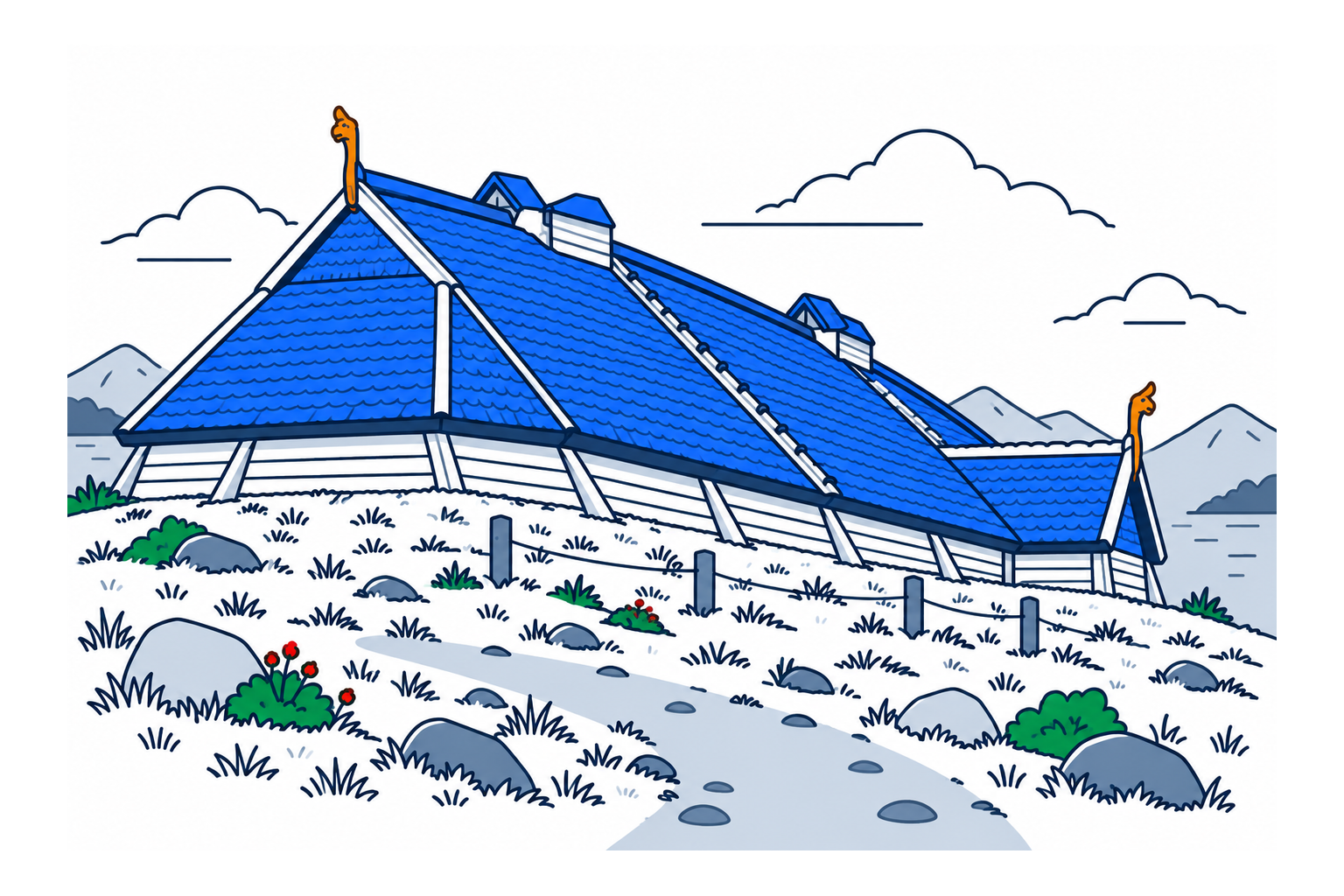
Lofotr Vikingmuseum at Borg reconstructs a chieftain’s longhouse beside the place where archaeologists uncovered its remains. The museum combines evidence from excavation with a full-scale interpretation of domestic life, feasting, crafts and power in the Viking Age.
The place1
The reconstructed longhouse is eighty-three metres long and represents the building’s final phase in the tenth century. It was completed when the museum opened in 1995. Its position next to the excavation site keeps the reconstruction connected with the original evidence while making clear that visitors enter a modern interpretation, not surviving Viking walls.
History and local connections1
Archaeologists identified different functions through the distribution of objects, hearths and chemical traces in the ground. The reconstruction divides the house into five rooms, including a residential part, feast hall and former livestock area. The valuable finds concentrated in the hall helped inform its interpretation as a space for ceremonies and the chieftain’s high seat.
What to look for1
The museum presents craft work such as textiles, leather shoes and woodcarving. Guides explain objects and the reasoning behind the reconstructed rooms. The former barn area now contains figures and sculptures associated with Norse mythology, while the residential and hall spaces explore work, meals and gatherings in a powerful household.
Planning a visit12
Check the official Lofotr visitor information page for current opening hours, tickets and the day's activities. Demonstrations, food experiences and outdoor activities vary with the programme. They are not necessarily included in every entry ticket. First learn about the excavations, then explore the longhouse rooms to see how the museum explains the archaeological discoveries.
Sources
Last checked:
More places in Nordland


SamfunnPrep
Discover Norway. Prepare for the test.
Practice questions, clear explanations and mock exams.