
Places with a story
Sjøgata
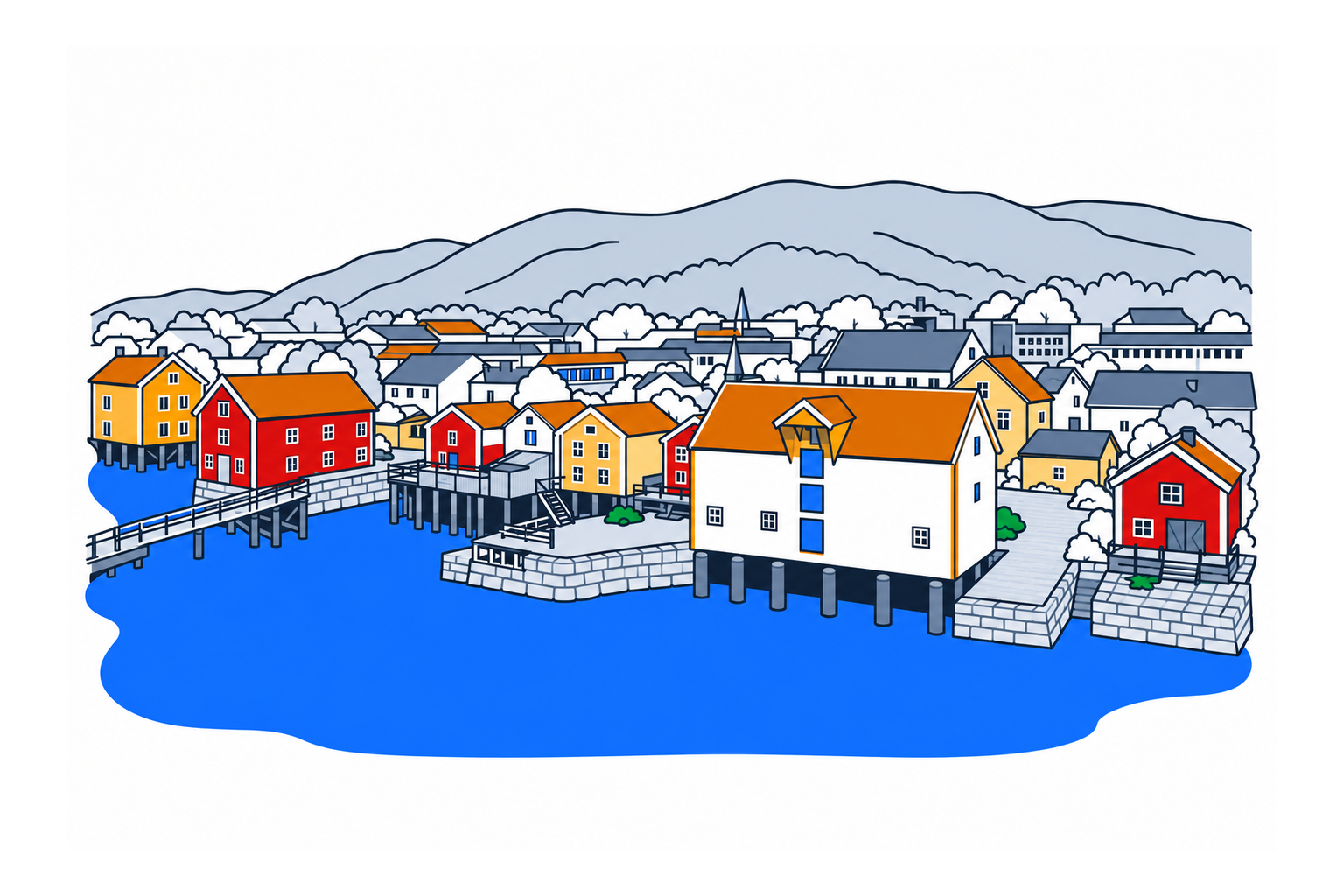
Sjøgata is Mosjøen’s historic wooden waterfront, where the town’s maritime past remains visible in buildings of different ages and uses. Its value lies in the whole streetscape rather than a single monumental structure.

The place2
Helgeland Museum describes Sjøgata as a protected district containing buildings from the eighteenth century onward. The street brings together the history of fishermen, farming households, commerce and industrial change. Looking along the waterfront therefore reveals several stages in the development of Vefsn’s principal town.
History and local connections12
Mosjøen received town status in 1875, becoming Helgeland’s first town. Its growth involved international influences and the industrial revolution as well as older coastal livelihoods. The museum’s historical walk also addresses the struggle to preserve Sjøgata, an important reminder that the survival of old wooden buildings required local decisions and advocacy.
What to look for1
Jacobsenbrygga at Sjøgata 31B is the museum’s waterfront exhibition building. Its exhibition, ‘The history of a town’, provides context for Mosjøen’s development. On a walk outside, pay attention to the district as a sequence of buildings and working spaces: it is the relationship between the street, the waterfront and different building periods that gives Sjøgata its character.
Planning a visit12
The museum offers information about guided historical walks, with booking arrangements that should be checked directly. At the time of checking, its Vefsn page reports Jacobsenbrygga as closed. Confirm which indoor spaces a proposed visit or tour includes. A walk through the district and admission to a museum exhibition are separate arrangements.
Sources
Last checked:
More places in Nordland


SamfunnPrep
Discover Norway. Prepare for the test.
Practice questions, clear explanations and mock exams.