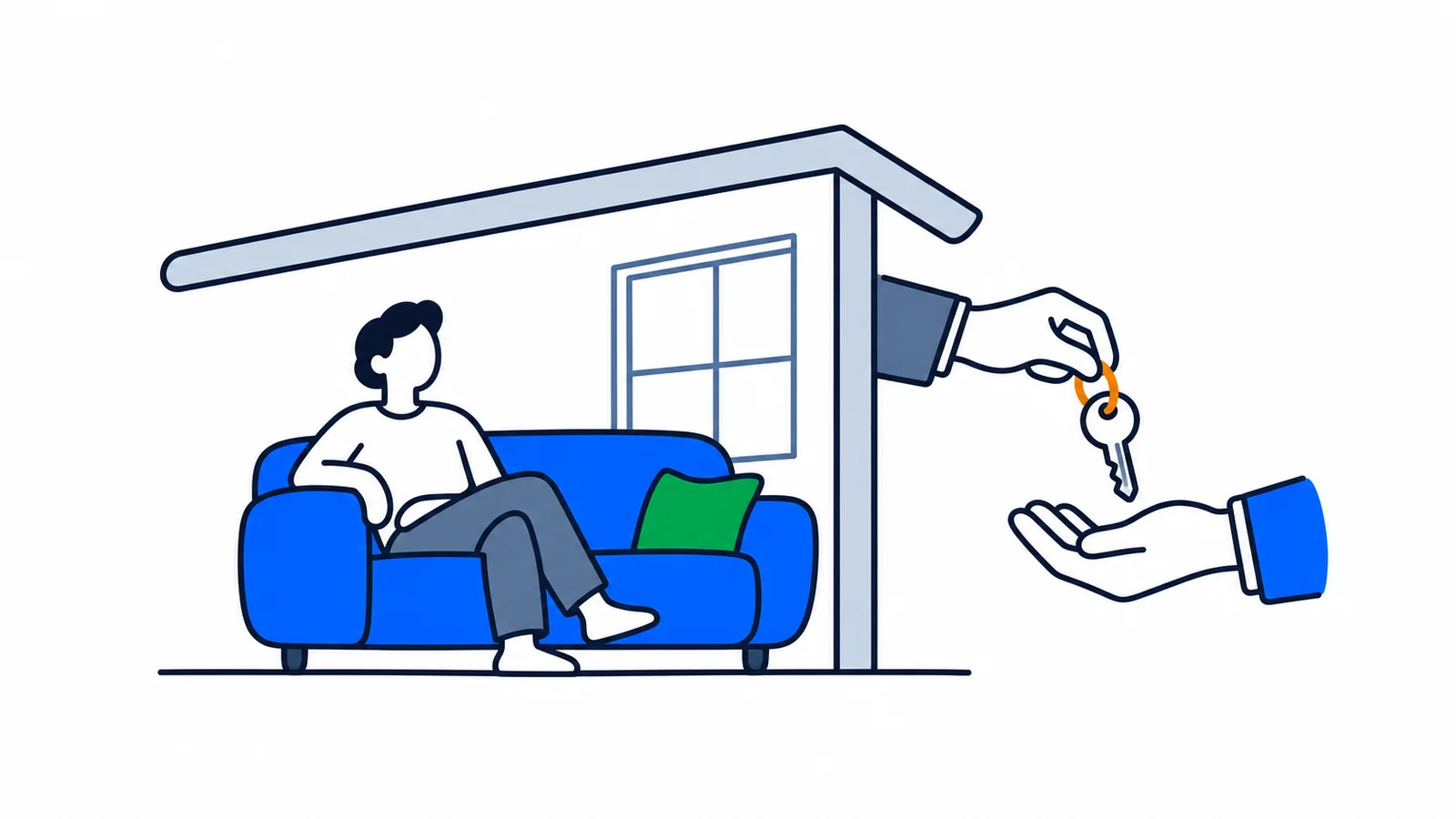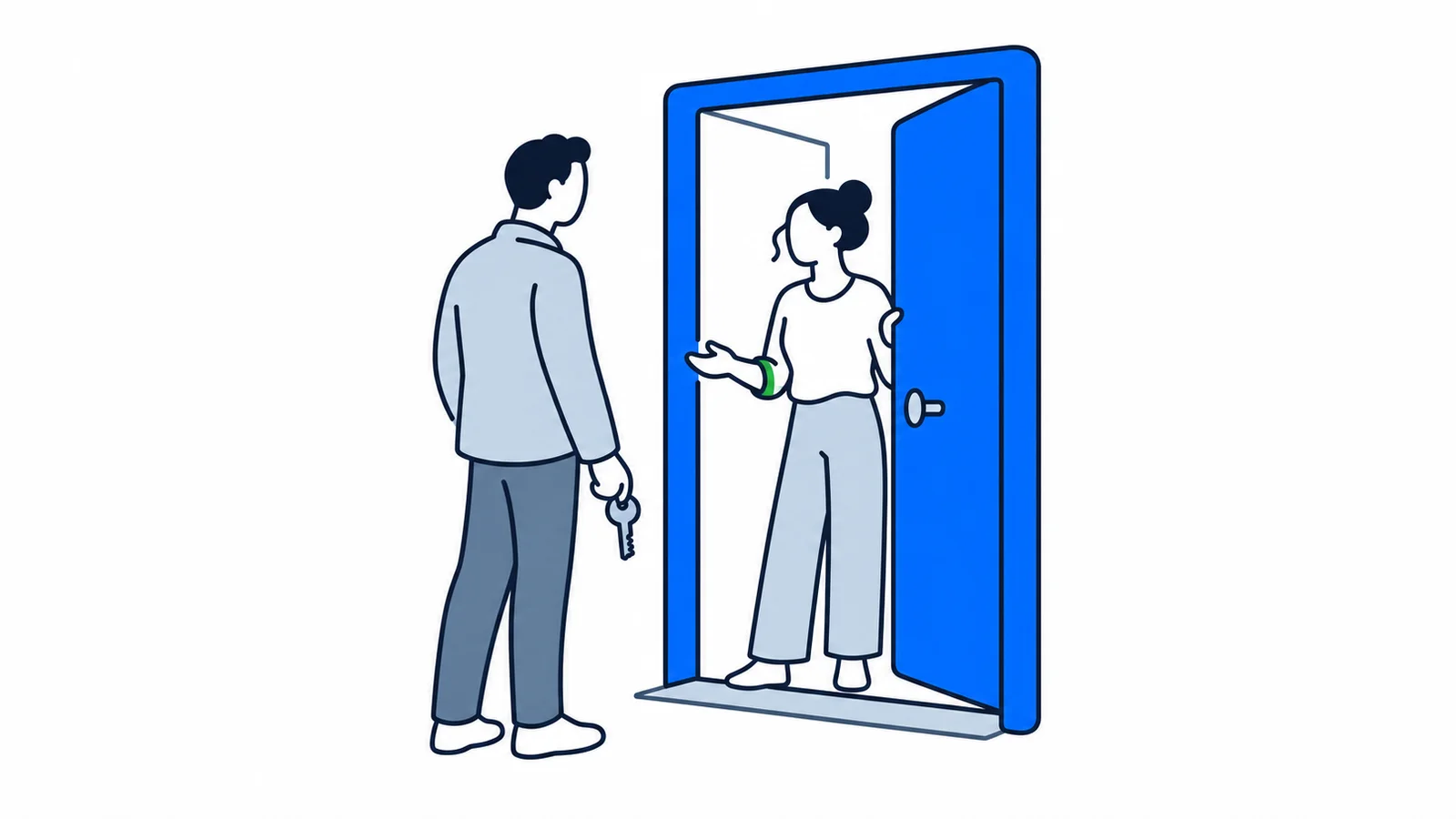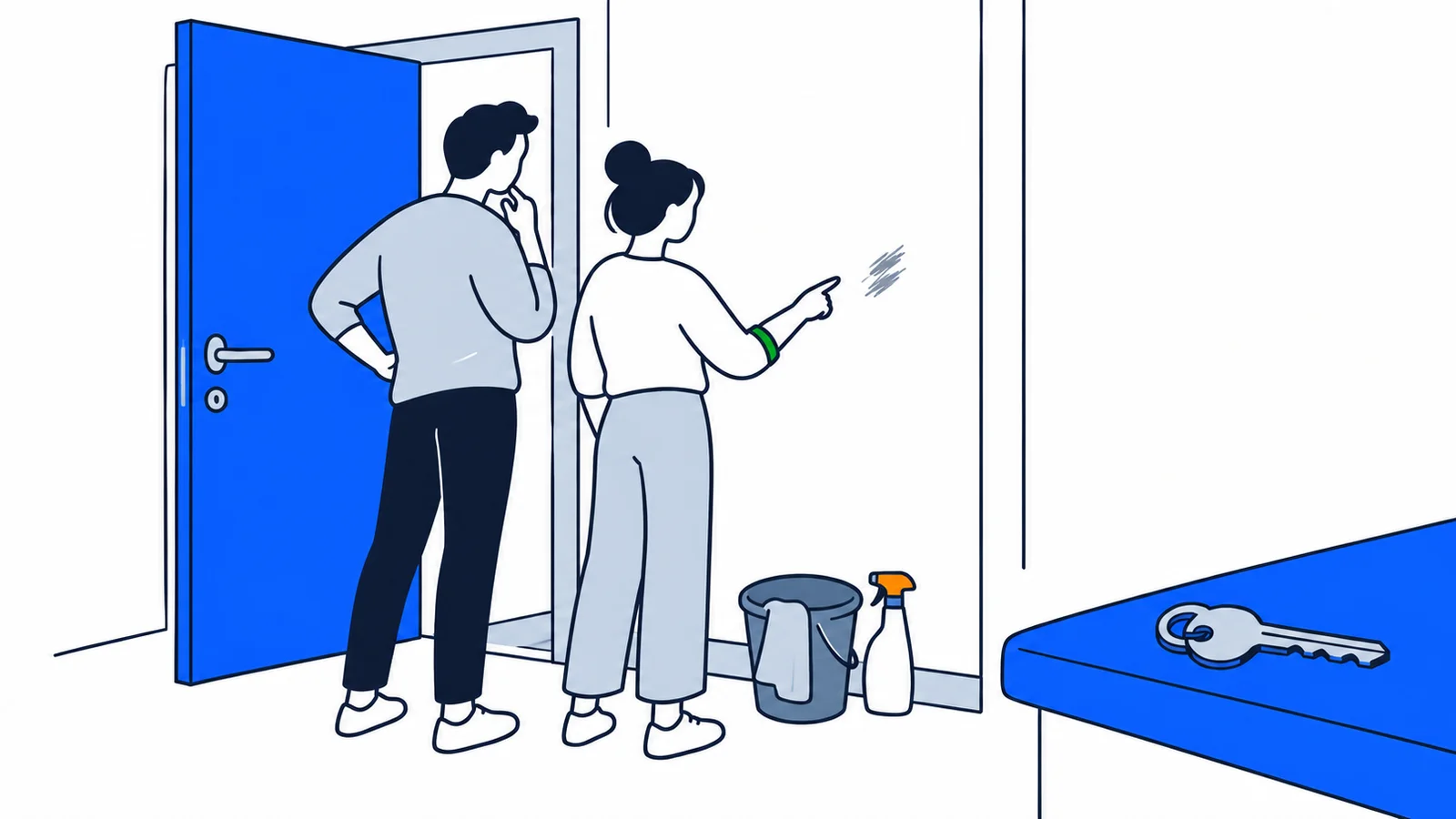

When moving out of a rental home, clear it, clean it and return all keys. Ordinary wear is normally not your liability for compensation. Take photos and write an inspection report before handing it back. Afterwards, you do not automatically have the right to return and fix problems.
What must be done before you return the keys?
The home must be in the agreed condition when the tenancy ends. If you have not agreed otherwise, it must be cleared and cleaned.
Find your agreement and the move-in documentation. Check what you agreed about furniture, cleaning and keys. Compare this with what is actually in the home now. SamfunnPrep has a separate rental agreement checklist.
As of 3 October 2026, the Rent Disputes Tribunal, HTU, explains that the home should normally be returned in the same condition as when it was taken over. Ordinary wear and defects the landlord must repair are exceptions. HTU is the public body that handles rental housing disputes. See HTU’s guidance on moving out.
Make a plan before moving day:
- Agree on the date and time for returning the home.
- Remove your belongings, including those in cupboards and storage areas covered by the agreement.
- Clean the rooms, surfaces and equipment you must return.
- Compare the home with move-in photos and the inventory list.
- Take photos of the cleared and cleaned home.
- Agree on an inspection and return of all keys.
This is a practical checklist. The amount of cleaning and what should remain must be assessed against the agreement and the home.
What is the difference between wear and damage?
Ordinary wear results from normal use over time. Damage may make you liable for compensation. There is no simple national price list that decides every mark and scratch.
Start with the condition of the home when you moved in. An old floor should not be assessed like a brand-new floor. At the same time, a specific instance of damage does not automatically become ordinary wear just because you have lived there a long time.
HTU explains that the landlord must prove that you are responsible for damage. The landlord is not entitled to compensation for ordinary wear or matters the landlord must maintain. See guidance on compensation claims by landlords.
You can separate the questions like this:
| Question | Helpful documentation |
|---|---|
| Was the mark already there? | Move-in photos, inspection report and earlier messages. |
| Is it ordinary use or damage? | Photos, an account of what happened and the home’s age and condition. |
| Who must maintain this? | The agreement and the relevant maintenance rules. |
| What will necessary repairs cost? | An itemised quote, receipt or invoice. |
Do not promise to pay for everything before you understand the claim. Ask for an explanation of each item instead.
Do you have to pay for a completely new replacement?
Liability for damage does not automatically mean that you must pay the full new price. A deduction may be needed because the landlord receives an improvement in standard.
HTU calls this betterment. If an older item is replaced with a new one, the assessment must account for the improvement. HTU says such a deduction is often necessary, even when the tenant is responsible for the damage.
For example, the landlord asks you to pay for a new floor because of damage. Ask about the floor’s previous condition and age, and why the whole floor must be replaced. Also ask how the betterment deduction was calculated. The example does not decide the case or the amount of any deduction.
The relevant guidance on damage when moving out explains that necessary repair costs may be claimed. An unexplained lump sum makes it harder to check what you are actually being asked to pay.
How do you prepare a move-out inspection report?
Write down what you agree and disagree about during a joint inspection. An inspection report documents the handover.
Include the address, date, names, condition of each room and number of keys. Note which photos belong with the report. Distinguish between an observed issue and who should pay for it.
For example, you could write: “Scratch on kitchen floor. Tenant says it was there at move-in. Landlord disagrees. Move-in photos are to be checked.” This is more precise than “tenant accepts all damage.”
Read the document before signing. Ask for a copy. If the landlord does not attend, document the home and the agreed key handover. Send a short written summary the same day.
Can you come back and clean afterwards?
You do not automatically have the right to enter again after returning the home. Explicitly agree with the landlord about any later cleaning or repairs.
HTU explains that the home is normally returned once the landlord has the keys and access. You then lose access. Cleaning and necessary repairs should therefore be completed before then. See HTU’s explanation of repairs after moving out.
If you find something to clean during the inspection, you can agree how to handle it. Write down the date, access and task. Do not enter with a key you kept unless you have an agreement.
What can you do if the landlord asks for money?
Ask for an itemised claim and respond in writing to anything you disagree with. The claim should explain the damage or inadequate cleaning, responsibility and necessary costs.
As of 3 October 2026, HTU says the landlord must notify you of the damage or defect and claim within a reasonable time, normally within 14 days. The amount can be specified later if the cost is not yet known. This does not mean every claim automatically disappears on day 15.
Ask for photos, invoices and a betterment calculation where relevant. Attach your own photos and the inspection report. Separate the items you accept from those you dispute.
The deposit has separate rules. See the guide to rental deposits in Norway. If you cannot agree, SamfunnPrep explains how to complain to the Rent Disputes Tribunal.
Use SamfunnPrep’s practical tools when organising your move. The most important things at handover are a ready home, a clear agreement about the keys and documentation of what you actually handed over.