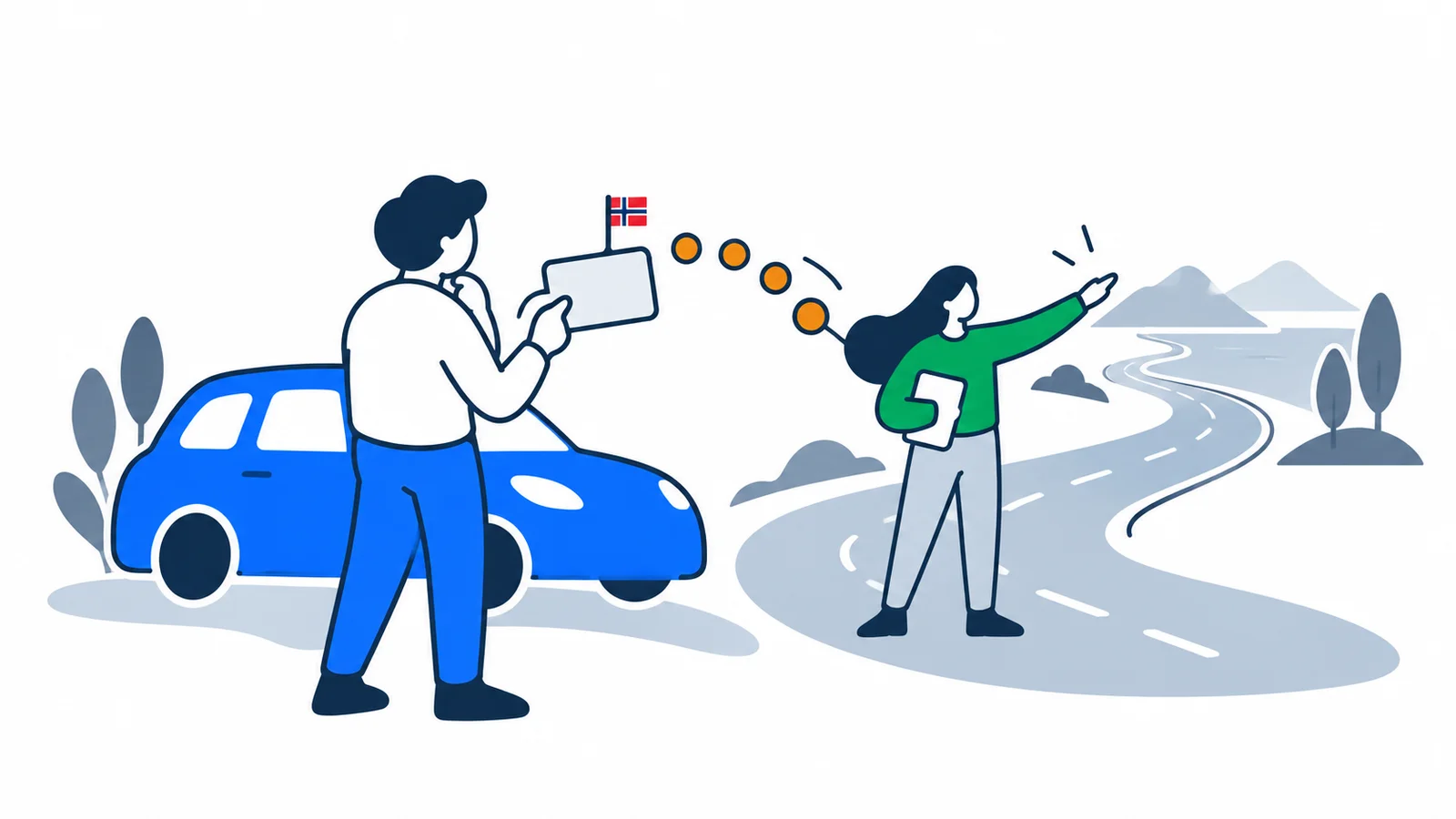

Before buying or borrowing an e-bike, check the motor’s rated power, when assistance cuts out and whether the bicycle has the required equipment. For an ordinary e-bike, the main rules are 250 watts, pedal-dependent assistance and a cut-off at 25 km/h. The motor may provide starting assistance without pedalling up to 6 km/h.
A vehicle does not become an ordinary bicycle simply because an advert calls it an “e-bike”. This guide covers electrically assisted bicycles, not electric scooters. The rules and sources were checked on 2 November 2026.
The three motor requirements to check first
Statens vegvesen, the Norwegian Public Roads Administration, describes the technical requirements. For an ordinary e-bike, clarify three things:
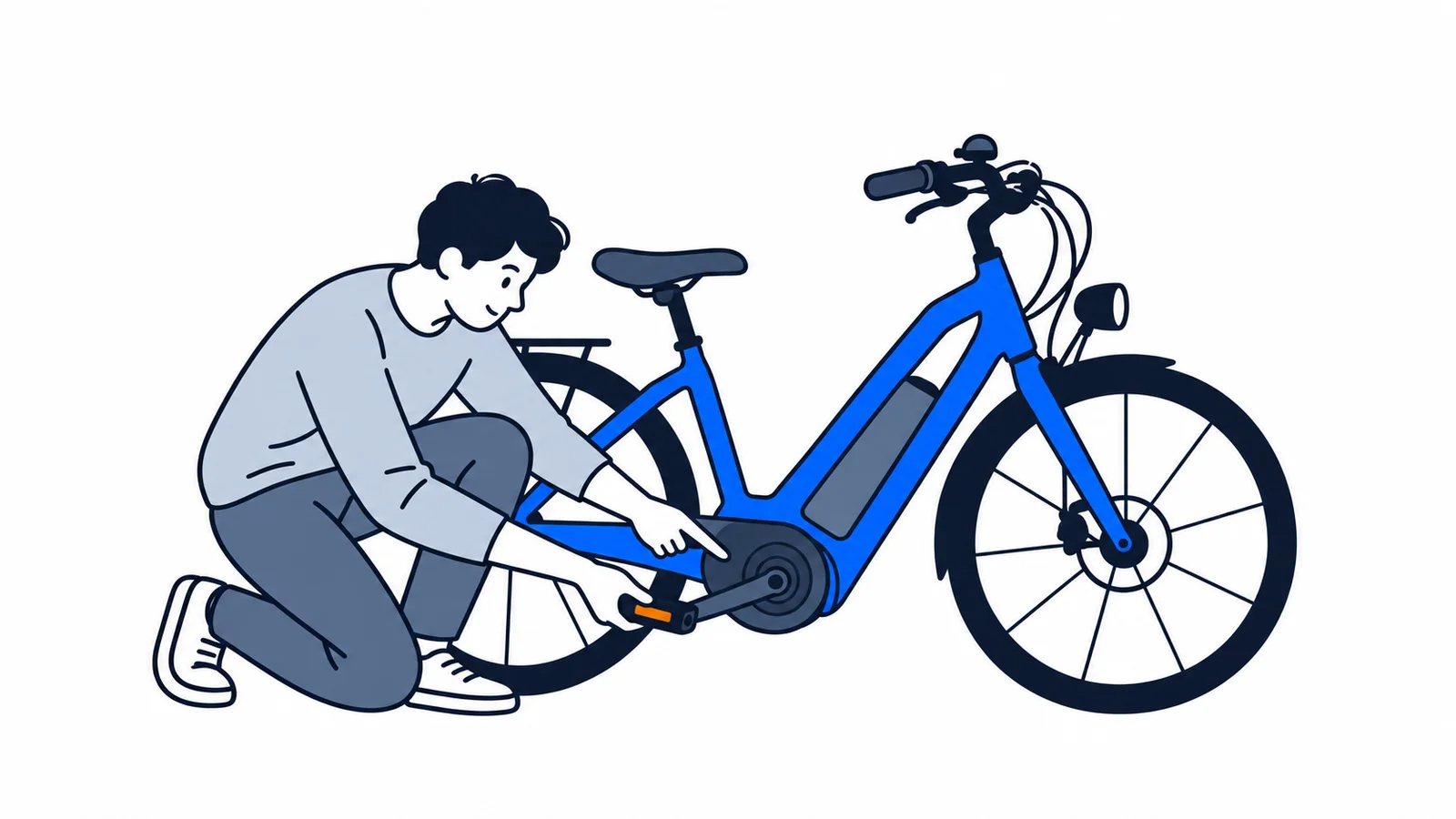
- Power: The auxiliary motor’s rated power must normally be no more than 0.25 kW, or 250 watts.
- Pedals: The motor must assist only while you pedal or operate a hand-crank mechanism. It must cut out when you stop.
- Speed: Assistance must cut out at 25 km/h. Starting assistance using the motor alone may operate up to 6 km/h.
Look for rated power in the documentation. Battery capacity is not the same as motor power. Watts, abbreviated W, measure power; watt-hours, Wh, measure energy. A battery labelled 500 Wh therefore does not mean that the motor has a rated power of 500 W.
Ask the seller to show you where the information appears in the manual or product documentation. If the advert only says “powerful motor” or gives an unclear power figure, you still do not have the answer you need.
Does 25 km/h mean the bicycle can never go faster?
The limit applies to motor assistance, not to the wheels physically having to stop at 25 km/h. You can go faster through your own pedalling or downhill, but the motor must not continue assisting above the limit.
You must still follow traffic rules and adjust your speed to conditions. Motor assistance cutting out at the correct speed does not permit riding fast through a crowd. A motor that actually cuts out is also different from a rider promising to keep the speed down.
Forbrukerrådet, the Norwegian Consumer Council, warns about vehicles that do not meet bicycle requirements. Do not buy on the basis that you can select a gentle riding mode if the documentation otherwise shows that the vehicle is not an ordinary e-bike.
Can an e-bike have 500 watts?
There are limited exceptions. Statens vegvesen specifies a maximum rated power of 500 watts for, among others:
- a bicycle with two seats allocated or lent as an assistive device by Nav;
- a bicycle with three wheels and at least three seats.
There is also a separate rule for bicycles used by certain emergency and preparedness services. This is not a general exception for private use.
Do not interpret these exceptions as allowing 500 watts for all tandems, cargo bikes, tricycles or bicycles bought with financial support. If the seller refers to an exception, ask which specific condition the bicycle meets. Clarify any doubts with Statens vegvesen before using it as an ordinary bicycle.
What equipment must the bicycle have?
The motor requirements apply in addition to those for the bicycle itself. Physically inspect the equipment, including when buying second-hand:
| Part | What should you check? |
|---|---|
| Brakes | Two separate brakes that work independently: one on the front wheel and one on the rear wheel. |
| Rear reflector | A red reflector on the bicycle. |
| Pedal reflectors | White or yellow reflectors on both sides of the pedals; for clipless pedals, use the crank arms when reflectors cannot be fitted to the pedals. |
| Lights | A white or yellow front light and a red rear light when riding in darkness or poor visibility. The lights must be attached to the bicycle. |
| Bell | The bicycle must have a bell. |
A helmet light does not replace the lights required on the bicycle. Reflectors do not replace mandatory lights either. See Statens vegvesen’s technical guidance for details on approved reflectors, visibility and flashing lights.
Check that the lights work when you actually need to use the bicycle. Ask the seller or a workshop to show you how they switch on and receive power. A light shown in an advert is of little use if it is missing or not working when you collect the bicycle.
Questions to ask before buying
Forbrukerrådet recommends asking the seller about the functions and trying the bicycle. You can use this list as a starting point:
- What is this model’s rated motor power? Ask for documentation for the exact version.
- When does the motor stop assisting? Ask for an explanation of both pedal control and the speed limit.
- Does the bicycle have starting assistance? Ask to see how it works and what its limit is.
- Have the motor, controller or software been modified? Ask particularly when buying used or converted bicycles.
- Is all necessary equipment included? Check brakes, reflectors, lights and the bell when collecting it.
Keep the advert, model designation and the seller’s written answers. This is a practical way to document what you were told; it is not an official approval certificate.
A short test ride may reveal problems with fit or functions, but does not by itself prove that all technical requirements are met. Do not test a vehicle in traffic if you already have reason to believe it is unlawful or unsafe.
What if the motor or documentation does not match?
Do not use the vehicle as an ordinary bicycle until you have clarified the issue. Contact the seller in writing and describe the discrepancy. Ask for documentation or correction, and contact Statens vegvesen if the question concerns the vehicle category.
A vehicle that falls outside bicycle requirements may be covered by rules for mopeds or another vehicle category. Approval, registration, insurance, a driving licence and a helmet may then become relevant. This does not mean that every modified bicycle can automatically be registered and used legally.
If you bought from a business and the bicycle has a fault, Forbrukerrådet provides guidance on your next steps. Start with the seller. The remedies you can claim depend on the purchase and the fault; a general statement in an advert does not settle the matter.
Before your first regular ride
Once the motor and equipment have been checked, choose a quiet ride to get familiar with the bicycle. Statens vegvesen recommends a helmet, a proper fit and fastening the strap. This advice also applies to short trips.
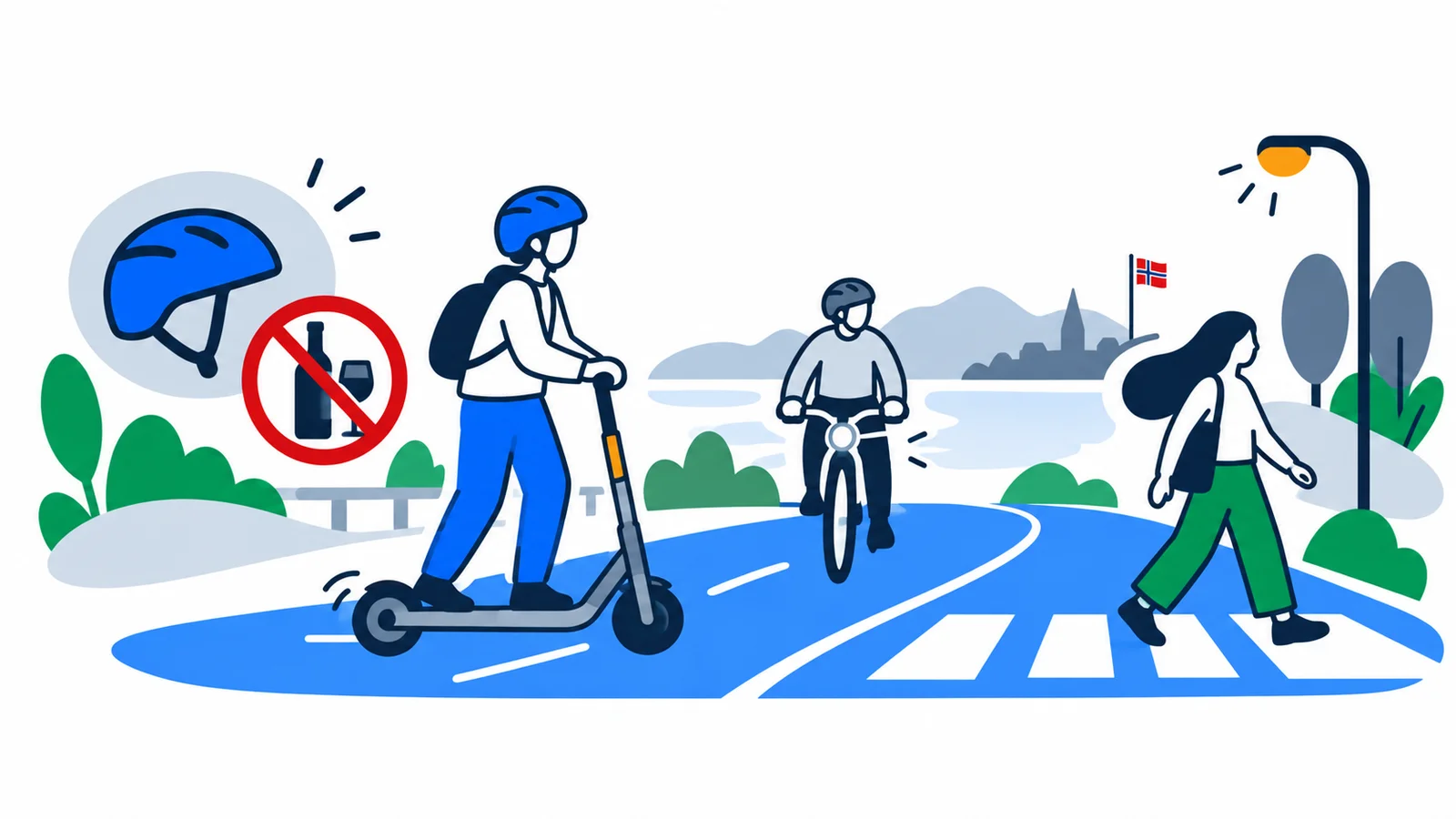
Read the traffic rules for cyclists before choosing your route. On a pavement, you must not obstruct or endanger pedestrians. When passing, keep a safe distance and approximately walking speed, no more than 6 km/h. If there are many people, get off and push. This traffic rule applies independently of the motor’s starting assistance.
Statens vegvesen’s advice on safe cycling also highlights distance and visibility around large vehicles. Do not position yourself close alongside the inside of a bus or lorry that may turn.
You can find more practical topics in SamfunnPrep’s article index and tools for everyday life in Norway. To clarify the requirements for a specific bicycle model, use the seller’s documentation and Statens vegvesen’s guidance.